
Part 4/4

Photo by Claudia Costa Moreira
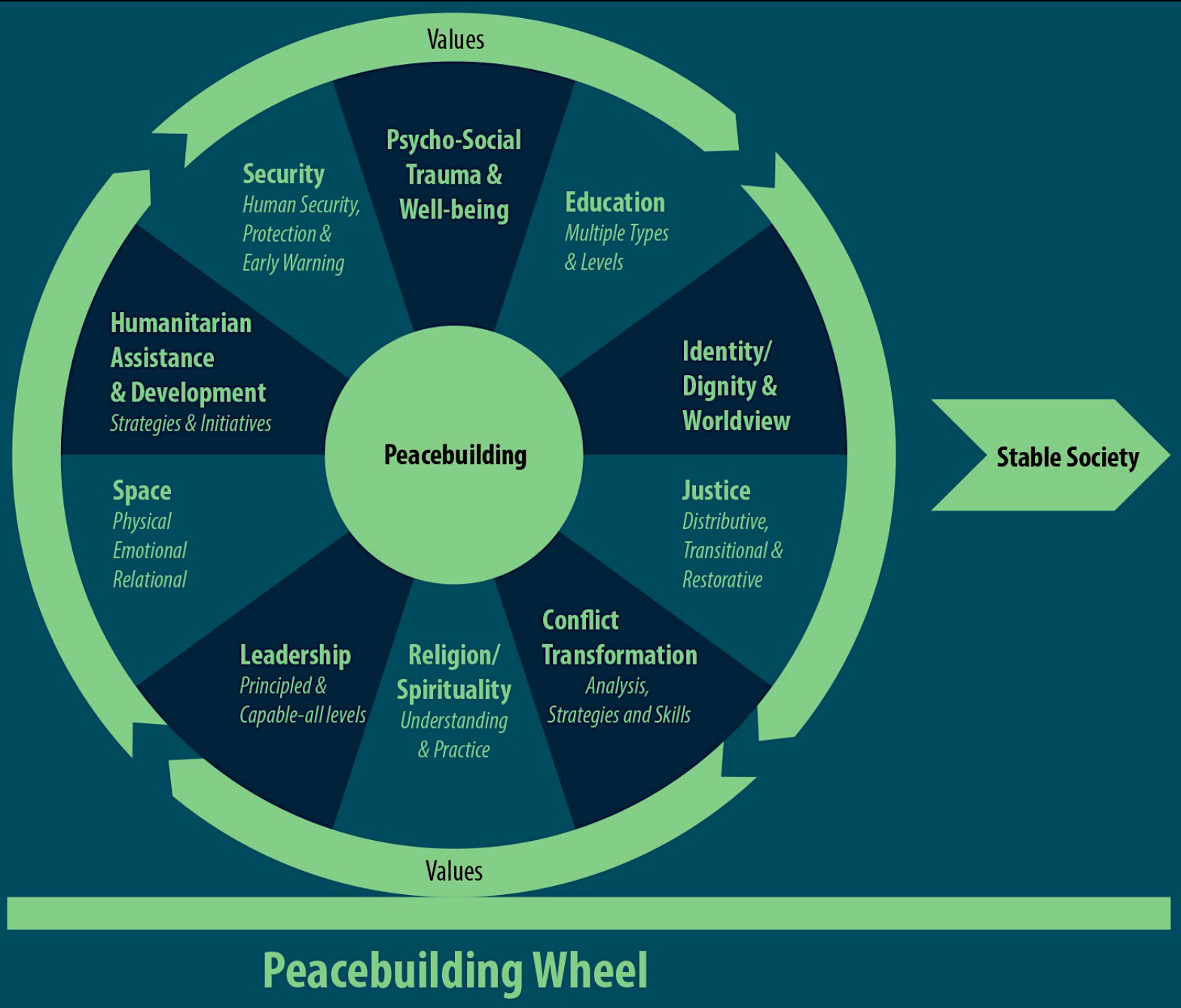
“Peacebuilding is the creation and nurturing of constructive relationships across ethnic, religious, class, and racial boundaries.”
From Kroc Institute for International Peace Studies // University of Notre Dame website
In this journey of learning about peace and justice, one concept has especially gained my attention: Dignity.
In 2016, I was introduced to Donna Hicks’ mind-blowing book Dignity, Its Essential Role in Resolving Conflict. Hicks starts the preface with a quotation that couldn’t be more relevant to leadership and peacebuilding:
“Treat people as they want to be and you help them become what they are capable of being.”
Johann Wolfgang von Goethe, a writer and statesman from the 18th century
My perspective of dignity comes first from my faith and understanding of God. I believe that every human being is created in His image; therefore, every human being on Earth has inherent dignity.
Hicks adds that dignity is more than fulfilling the principles of the Universal Declaration for Human Rights. It is also different from respect. Every person has inherent dignity, whether or not one’s actions deserve respect. Honoring the dignity of others is not based on their qualities or accomplishments.
The author proposes very difficult and important questions:
- What would it be like if our inherent dignity were recognized on a daily basis?
- What about the way we treat one another in everyday interactions?
And I have also wondered…
- How can we establish relationships, systems, structures, and decisions that honor human dignity and work against its violation?
Hicks affirms that offering care and attention is at the heart of treating people with dignity. Everyone matters and wants to be treated as if they do. She says that “if indignity tears us apart, dignity can put us back together again.”
What came to mind? Jesus’ Golden Rule: “As you wish that others would do to you, do so to them.” – Luke 6:31 ESV
Personally, I don’t need deep self-assessment to see that I have both the potential to acknowledge human dignity and to violate that dignity, in myself and others. It is a daily battle.
These questions are always with me:
- Recognizing my potential for good in spite of my instinct for violating dignity, am I also able to recognize the potential for good in others who do evil?
- Can I stop the cycle of dignity violation in myself, restraining my instincts to react with anger and upholding my potential to acknowledge others’ inherent dignity?
I think this is one of the hardest challenges we are facing as individuals, communities, organizations, and governments, regardless of culture, faith, belief, or interest. The result of our failure in this challenge has been the spiraling violence we are witnessing and suffering every day on many different levels. The violation of dignity leads to suffering and breaks relationships.
Wow! I need a deep breath here, don’t you?
If you have been walking the leadership journey, you know how all this is connected to our daily life in any work environment.
How then can we lead the way in honoring dignity and modeling this value during difficult changes, tough decisions, under competition, times of high pressure, lack of resources, conflict, polarization…? How can we lead people to recognize that they were born worthy and others were as well?
Recently, another book from Hicks came to my attention – Leading with Dignity, How to Create a Culture that Brings Out the Best in People – and a missing piece fell into place in my thoughts on leadership for peacebuilding: anyone attempting to lead must deepen their understanding of dignity, and how to embody, model and make it work for others and for their organization.
Let me share a few helpful insights:
- Often the very culture of an organization violates dignity. Unspoken and unaddressed norms determine how people interact. Leaders must learn about dignity and how vulnerable people are of having their dignity violated. With this knowledge, leaders are more mindful of how their decisions affect the morale of the team
- Exercising dignity in leadership is not a one-way street. It is a shared-responsibility! It requires everyone to make a commitment to one’s own dignity, the dignity of others, and the dignity of the organization
- Inspiration does not provide a solid foundation for accomplishing meaningful change! What is needed is insight that comes from knowing how to develop healthy relationships and how all of us can flourish
Dignity and Identities

Photo by Claudia Costa Moreira
The first element of the The Ten Elements of Dignity presented by Hicks is the Acceptance of Identity. I have especially reflected on the fact that we all are a combination of several overlapping identities. I am not woman or white. I am woman and white and many other things. I have many questions in my mind on this topic, among them:
- How have my lenses as a Brazilian, white, middle-class, highly educated, Christian, able-bodied woman informed how I define and practice leadership?
- How can I, as a peacebuilder and leader, establish and nurture healthy relationships where:
- I consider others neither inferior or superior to myself?
- Each one is encouraged and free to present one’s best self?
- I interact without prejudice or bias, and accept that characteristics such as race, ethnicity, citizenship, religion, gender, sexuality, social class, age, and disability are at the core of people’s identities?

Photo by Claudia Costa Moreira
Intersectionality, noun
The Oxford Dictionary
“The interconnected nature of social categorizations such as race, class, and gender as they apply to a given individual or group, regarded as creating overlapping and interdependent systems of discrimination or disadvantage”
The intersectionality framework has helped me to better understand and analyze the complexity of the world, of people, and of human experience. It takes into account people’s overlapping identities and experiences in order to understand the complexity of the prejudices they face. A good reading on this is Intersectionality by Patricia Collins and Sirma Bilge.
Some would say that intersectionality is important to those in the field of social work, but I have no doubt this lens is fundamental to the practice of leadership.
- How do all these influence recruiting and hiring processes, working conditions, salaries, work environment, and career opportunities?
Inequality in the workplace, for example, is not only about gender differences. In her article Working Life Inequalities: Do We Need Intersectionality?, Paulina de los Reyes talks about how age, nationality, race, sexual preferences, bodily impairment, and class background are crucial factors in the opportunities and obstacles that people face at work. She shows how an intersectional perspective can deepen our understanding of the informal hierarchies that create and preserve work life inequalities.
To lead with dignity, we need to acknowledge, stop and replace patterns of oppression with new ones that honor human dignity. Leading with dignity requires us to live in the truth that we are all interconnected. Leading with dignity requires us to alter our own behavior in the system.
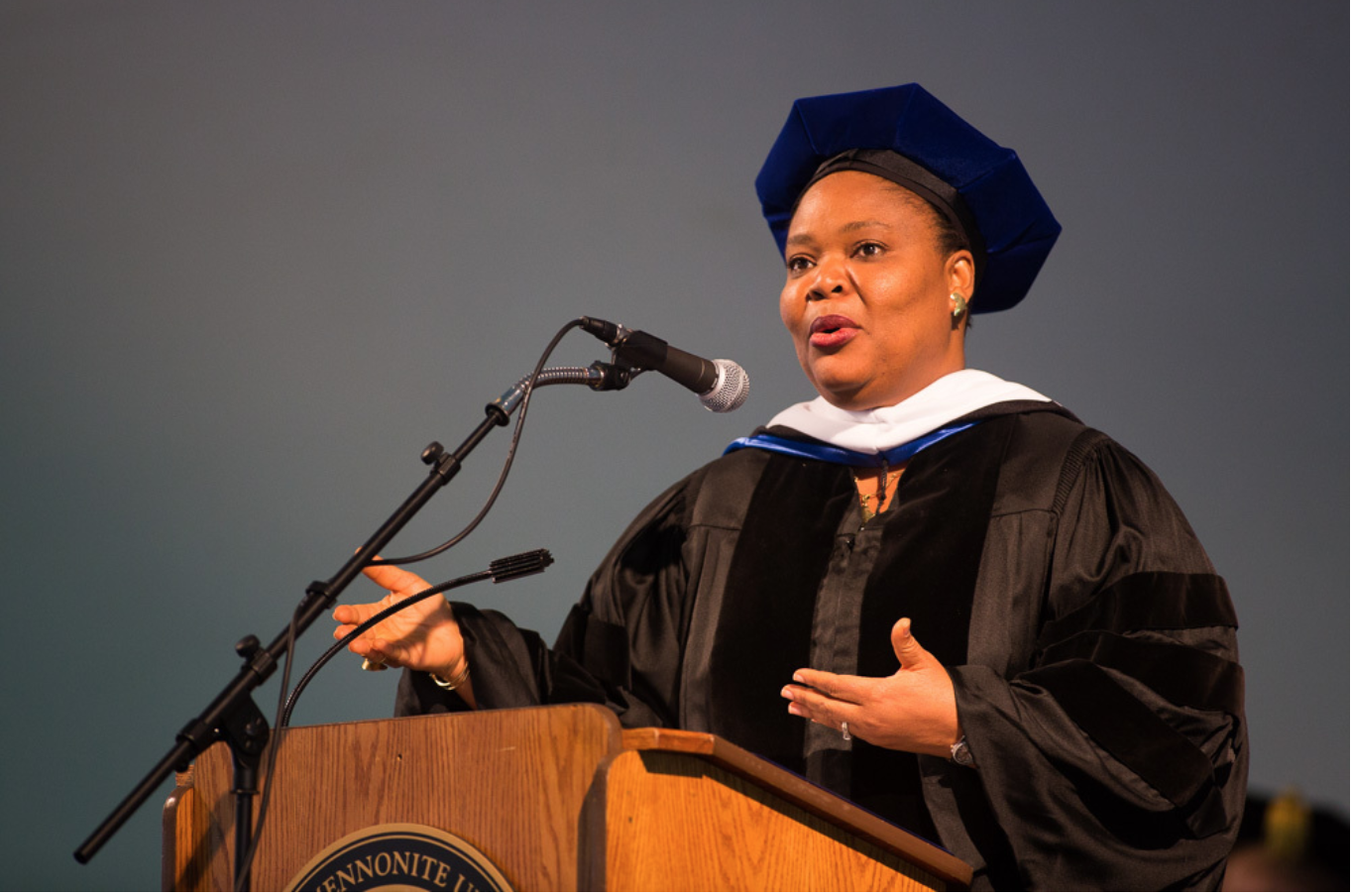
How is this related to peacebuilding? I will let Leymah Gbowee answer this question:
“…the defenders of peace and justice are those who understand what it means to be a part of the collective humanity, that regardless of your skin color, the way you pray, we all breathe the same air.”
EMU 2018 Commencement Address
There is much more to talk about… I will come back!

Photo by Claudia Costa Moreira
References
Bible Gateway / English Standard Version. https://www.biblegateway.com/passage/?search=luke+6&version=ESV
Collins, P. H., & Bilge, S. (2018). Intersectionality. Cambridge, United Kingdom: Polity Press.
Gbowee, L. (2018, May 6). 2018 Centennial Commencement [Audio blog post]. Retrieved May 9, 2019, from https://emu.edu/now/podcast/?s=leymah
Hicks, D. (2018). Leading with dignity: How to create a culture that brings out the best in people. New Haven: Yale University Press.
Hicks, D. (2013). Dignity: Its essential role in resolving conflict. Yale University Press.
University of Notre Dame. (n.d.). Strategic Peacebuilding // Kroc Institute for International Peace Studies // University of Notre Dame. Retrieved from https://kroc.nd.edu/research/strategic-peacebuilding/
Reyes, P. D. (2017). Working life inequalities: Do we need intersectionality? Society, Health & Vulnerability,8(Sup1), 1332858. doi:10.1080/20021518.2017.1332858


 ClaudiaMoreira